
ILI System Test Yard Facilities
Fully customizable ILI test yard allowing for comprehensive mechanical testing and detection capability assessment.
Permanent ILI Pump Through and Pull Through Lines
Infinity loops: 4”, 8″, 10″, 12″, 16“
Pump through lines: 4”, 6”, 7”, 8”, 12”, 14”, 18″, 20”, 24″, 26″, 28″, 30″,
32″, 36″, 44″, 52“
Pull through lines: 6”, 8”, 10”, 12”,14”, 16”, 20” 22”, 24”, 26”, 28” 30” 34”,
42”, 44”, 52”
Flawed Specimen Pipe Spool Library
Dexon’s inhouse flawed specimen pipe spools: both artificial and natural defect specimens
Client supplied flawed specimen pipe spools (cut outs): Open and coated
pipe spools allowing for blind verification

Crack Detection and Sizing In-line Inspection
Key Tool Fleet Features•3”-52”
•Liquid couplant required, batching in gasses and multiphase products
•Shear wave angle beam tip diffraction Vs. reference-based inspection
•High resolution detection and sizing capabilities vs detection only
•Defect types:
Girth weld cracking, hydrogen induced cracking, longitudinal weld cracking, stress corrosion cracking, spiral weld cracking…

High Resolution Crack Detection and Sizing
- Axial and circumferential crack detection and sizing and metal loss in a single ILI system
- Reporting conforms to POF 100 NOV 2021 recommendations
- Tip diffraction over reference-based sizing method
- Customizable sampling rates of up to 1mm circumferential x 1mm axial samp ling resolution or 1 million measurements per m2
- Achieving a crack sizing capability of ± 0.8mm at 80% certainty
- JDA Exxon Mobil + Dexon, PTC Berlin 2024, Innovative and Accurate Time-Based Crack Sizing ILI tool for Greater Pipeline Reliability

Mechanical and Ultrasonic Geometry Assessment and Pipeline Feature Identification
Key Service Specifications
•Inspection medium: Gas and liquid + online and offline
•Pipeline diameters: 3”-52”
•Asset types: All pipelines (Gathering lines, transfer lines, loading lines…)
•Defect types: Ovality and geometric deformations, XYZ mapping
•POF + API 1163 compliant reporting
Detection capabilities
•Assessment of pipeline ovality
•Detection of pipeline features: Off takes, flanges, girth welds, valves, tees…
•Detection and sizing of geometric defects and deformations caused by external mechanical forces: Dents, buckling, bulging, wrinkling…
•Detection of girth weld data for use in bend strain analysis
•Detection of internal buildup and scaling
•Combined geometry assessment and feature identification with ultrasonic metal loss inspection data

Restricted Space
Challenge
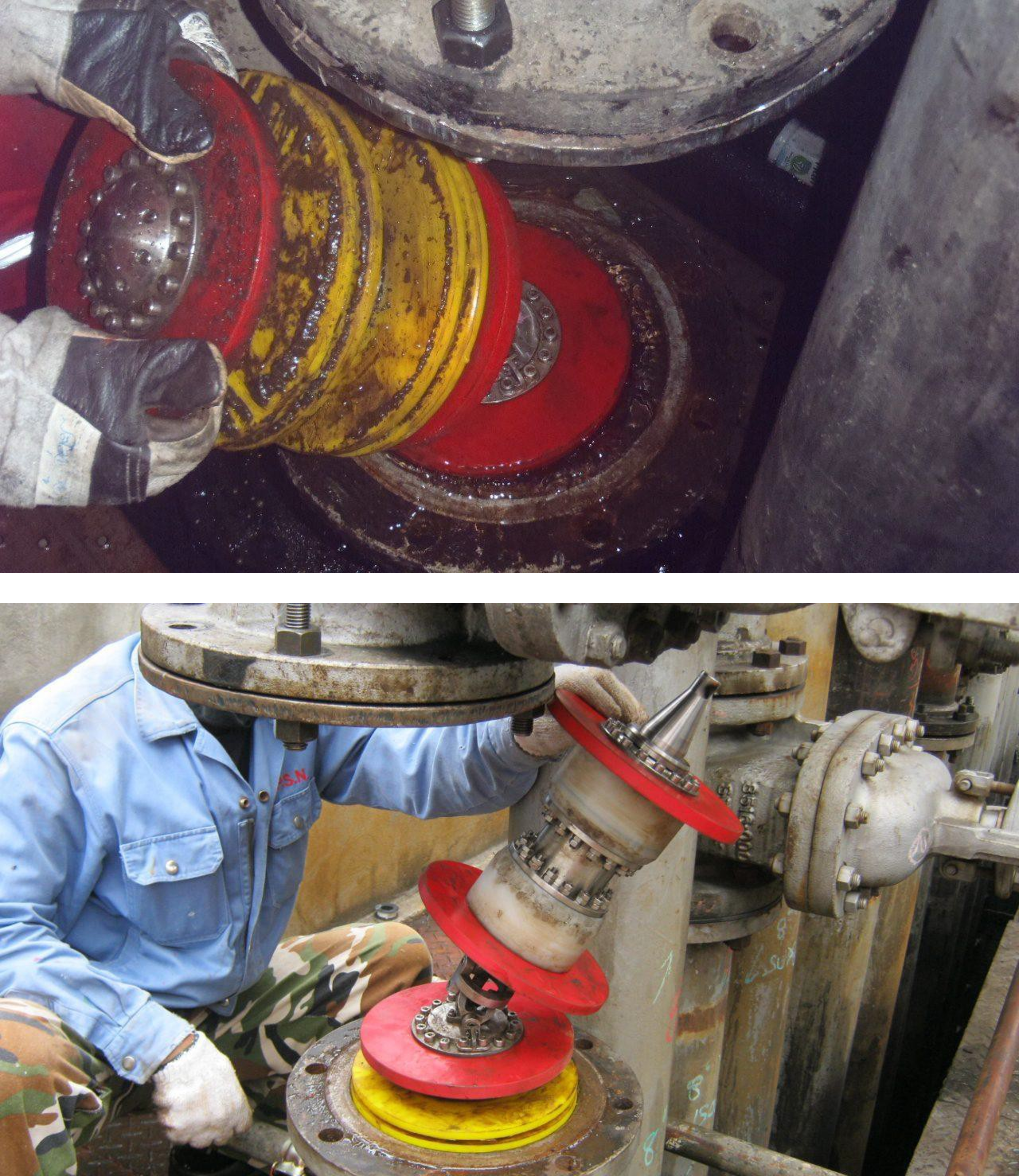
Client required inspection of 17 short-length pipe sections buried under an 8-lane urban highway with the following challenges:
•No launchers or receivers
•No previous inspection history
•Extremely restricted space
Solution
Small lightweight ultrasonic rotary tools were used.
Reduced size and weight meant the tools could be launched by hand directly into the pipe via a disconnected flange and propulsion was achieved using a blind flange and water hose.
Similar process used successfully in restricted
space offshore operations.
Unpiggable LineChallenge
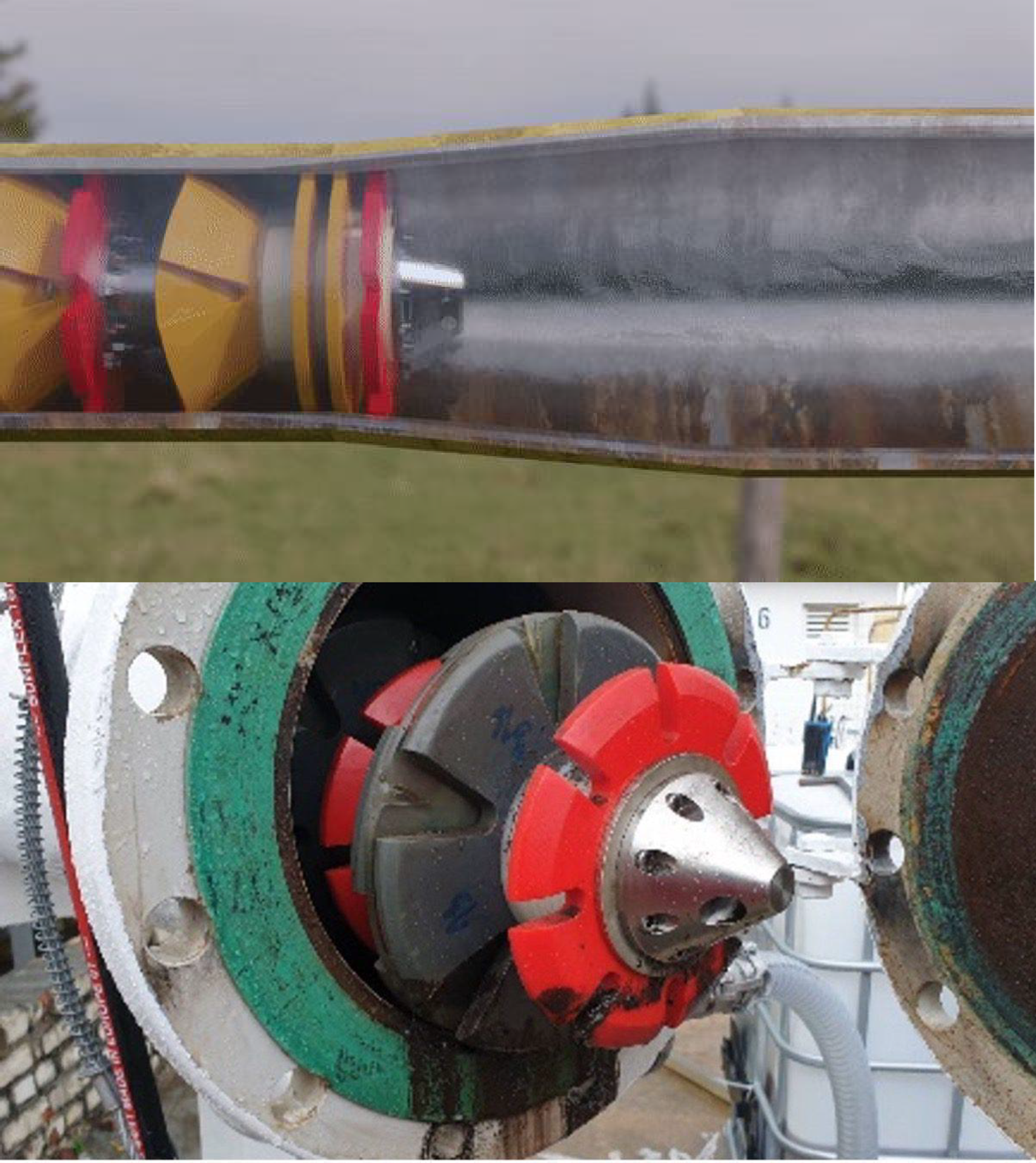
Dexon was faced with the following challenges:
Multiple diameter
Back-to-back bends
Wye joints
Solution
Specialists from Dexon Research Development and Engineering group conducted field studies and engineering assessments in order to design and develop specialized tools to accommodate the back- to-back bends and avoid becoming stuck at the Wye joints.
Verification of the design and proof of capability was only made possible due to Dexon’s extensive 6-acre test yard built to test every possible pipeline configuration.
Well Casing Inspection
Challenge
Client had corrosion issues in the well casing on new wells drilled at a coal seam gas project in Australia and needed a solution to detect wall loss and report rapidly after the inspection was completed in order to complete repairs.
•Shallow wells.
•Fast operating environment.
•Precision measurement critical.
Solution
Specialists from Dexon Research Development and Engineering group designed and engineered a tool specialized for the inspection of well casing.
The tool underwent rigorous testing and verification in Europe before being successfully deployed in the field.


Cleaning PIGs
